 Recruit
How to Hire a Head of Growth
What a Head of Growth actually owns, how the role differs from a performance marketer, and how a search for one is structured. Every claim traces to Recruitmint's published role list and engagement models.
What a Head of Growth actually owns, how the role differs from a performance marketer, and how a search for one is structured. Every claim traces to Recruitmint's published role list and engagement models.

A Head of Growth owns the growth function end to end, acquisition, experimentation and retention working as one system, not a single channel or campaign. Hiring one correctly means calibrating that scope before sourcing a single candidate, because the role fails most often from a blurred mandate, not from a shortage of strong people.
Key numbers
A Head of Growth is a function owner, not a channel owner. The mandate typically spans acquisition (how new customers arrive), experimentation (what gets tested and how fast), and retention (whether the customer comes back and spends again). A person hired into this role is accountable for the whole loop, not for one leg of it.
That is what separates the role from the other Growth & Ecommerce positions filled repeatedly in this sector: Head of Ecommerce / Ecommerce GM, Head of TikTok Shop / GM TikTok Commerce, Head of Brand & Organic, Performance Marketing Leadership, and Retention & Lifecycle Leadership. Each of those is a slice. Performance Marketing Leadership owns paid acquisition and its efficiency. Retention & Lifecycle Leadership owns the post-purchase relationship, email, SMS, loyalty, win-back. Head of Ecommerce owns the store, the P&L, and often the operational stack around it. A Head of Growth sits above or alongside these, deciding where the next dollar of effort goes and why, and is judged on the combined output rather than any single lever.
This is why the job description question ("head of growth job description") gets murky in practice. A well-written one names the levers the person controls (budget authority across channels, experimentation cadence, retention ownership or a dotted line to it) and the levers they do not (brand identity, supply chain, fulfillment). Without that line drawn, the role reads like three jobs stitched together, and candidates who could do any one of them well will struggle with the ambiguity of doing all three at once.
The confusion between "hire a performance marketer" and "hire a Head of Growth" is the single most common calibration mistake seen in this category. A performance marketer optimizes what already exists: campaigns, creative iterations, bid strategy, channel mix within an established budget. A Head of Growth decides what the growth motion should be in the first place, sets the experimentation roadmap, and is accountable for retention economics as much as new-customer volume.
A useful test during calibration: ask what the person is accountable for twelve months in, not what channels they will run day one. If the honest answer is "efficient paid spend," the mandate is Performance Marketing Leadership, and the title should say that. If the honest answer touches acquisition, experimentation velocity, and retention economics together, the mandate is a Head of Growth, and the search needs to be built around someone who has run that combined loop before, not someone who has excelled inside one lane of it.
The Hiring Scorecard's own framing describes exactly the failure pattern that shows up in Head of Growth searches more than almost anywhere else: "the hardest roles aren't usually difficult because great talent doesn't exist. They become difficult when the mandate isn't clear, expectations don't match the market, ownership is blurred, or the hiring process isn't calibrated to identify the people who can actually perform at your stage of growth."
Blurred ownership is the specific trap for this role. A founder posts "Head of Growth" but really means "someone to run our ads." A board asks for "a growth leader" without deciding whether retention reports to them. A hiring manager writes the job description around a previous hire's strengths rather than what the business needs next. In every version, strong candidates self-select out, they can tell the scope is undefined, or the wrong candidate gets hired and spends several months discovering the real job is different from the one they interviewed for.
Expectations not matching the market compound the problem. A company hiring its first Head of Growth at seed stage is often looking for someone who can build the function from nothing, while the job posting reads like a later-stage mandate with a team of eight already in place. Calibrating stage against candidate profile before sourcing avoids interviewing people who are either overqualified for a build-from-scratch role or underprepared for one that already has infrastructure and needs someone to scale it. This is also where the compensation conversation tends to break down: a mandate that has not been fixed cannot be priced accurately, and a range set against the wrong scope will either scare off the candidates who could actually do the job or attract ones who cannot.
Calibrating the mandate happens before sourcing starts. That means a short conversation, or the Hiring Scorecard itself, a 2-3 minute, 9-question assessment, establishing what the Head of Growth actually owns, what stage the company is at, what "performing" looks like in the first two quarters, and what support exists around the role: a media buyer already in place, a lifecycle stack already built, or neither. Only once that scope is fixed does search activity start.
From there, which model fits depends on how much of the process the company wants to run itself and how many roles are open at once.
| Model | Fee structure | Fits when |
|---|---|---|
| Sourcing Sprint | Shortlist only, pricing on request | The mandate is already clear, interviews will run internally, and the need is a calibrated shortlist to work from. |
| Full Search | Launch fee plus a success fee | The mandate needs calibration help, and the company wants the search managed end to end, through assessment, interviews, offer and close. |
| Embedded Partner | Monthly fee plus a reduced success fee | The Head of Growth is one of several open roles, for example alongside Performance Marketing Leadership or Retention & Lifecycle Leadership, and ongoing recruiting capacity makes more sense than a single search. |
The recommendation logic behind the Hiring Scorecard follows this same pattern: sourcing-only support for a single role points to the Sourcing Sprint, ongoing support or four or more open roles points to the Embedded Partner, and everything else defaults to the Full Search. Success fees on placement are not published as a fixed percentage. They vary based on role seniority, search complexity and hiring volume, and a Head of Growth search at the executive tier, or one bundled with unusual complexity such as international relocation, a rare channel specialization, or a tight compensation band, is the kind of search quoted individually rather than off a standard rate card. The recruiter fees and engagement models explained piece walks through how these three structures compare across sectors, and how much recruiters charge covers the broader fee landscape for readers weighing an outside search against building the pipeline in-house.
A Head of Growth search under the Full Search model moves through the same sequence as any high-impact hire across Growth & Ecommerce: calibration on scope and stage, a talent map, sourcing across whichever of the six regions searched (Western Europe, North America, the Balkans, Eastern Europe, the Middle East, Latin America) fits the mandate, since growth leaders with a genuine acquisition, experimentation and retention track record are not evenly distributed by geography, a shortlist built around demonstrated ownership of a full growth loop rather than a single channel, structured interviews, and an offer process managed through close. A separate piece, how we run a Head of Growth search, covers that sequence in more detail step by step.
Not every Head of Growth hire needs outside help. If the mandate is genuinely well-defined, the company already has real applicant flow, inbound interest, a strong network, a recognizable brand in the space, and the internal team has bandwidth to run structured interviews, posting the role and running the process in-house is often the right call. We earn our cost when the mandate is still fuzzy, when the talent pool needed sits outside the company's existing network or region, when the role has already been open for a while without producing candidates who fit the actual scope, or when it is one of several roles competing for the same internal hiring bandwidth.
The distinction is worth being honest about before spending anything. A single, clear, well-scoped role with candidates already applying does not need a Sourcing Sprint, a Full Search, or an Embedded Partner. It needs a good job description and a disciplined interview process.
| Question | What "clear" looks like | Evidence to have ready |
|---|---|---|
| What does this person own in twelve months? | Acquisition, experimentation and retention named explicitly, with the boundary against Performance Marketing Leadership or Retention & Lifecycle Leadership drawn | A one-paragraph mandate, not a channel list |
| What stage is the company at? | Explicit statement of whether the function exists yet or needs to be built from nothing | Current headcount and tooling in growth-adjacent roles |
| Who else touches growth? | Named overlaps with Performance Marketing Leadership, Retention & Lifecycle Leadership, or Head of Ecommerce, and who reports to whom | An org chart, even a rough one |
| What does the compensation band reflect? | A figure set against the actual scope, not a title copied from a job board | A range the hiring manager will defend in a candidate conversation |
| Where might the right person be? | Openness to markets beyond the obvious one, if the local pool is thin | A stated position on remote or international candidates |
A Head of Growth owns acquisition, experimentation and retention together, which is what separates the role from Performance Marketing Leadership, Retention & Lifecycle Leadership, and the other titles under Growth & Ecommerce. Most bad hires in this role trace back to a mandate that was never made explicit rather than a shortage of strong candidates. A founder who already knows the mandate and just needs candidates fits a Sourcing Sprint; a company that wants the full process managed fits a Full Search, a launch fee plus a success fee; a company hiring several growth roles at once fits an Embedded Partner, a monthly fee plus a reduced success fee. A single, well-scoped role with real applicant flow does not need any of the three, and pricing for the three is available on request.
A performance marketer optimizes acquisition channels within an existing budget and strategy. A Head of Growth sets the strategy itself, owning acquisition, the experimentation roadmap, and retention economics as one connected function, and is accountable for the combined outcome rather than a single channel's efficiency.
The three published engagement models apply here as they do to any Growth & Ecommerce search: a Sourcing Sprint when the client runs interviews internally, a Full Search, a launch fee plus a success fee, for an end-to-end process, or an Embedded Partner, a monthly fee plus a reduced success fee, when a Head of Growth is one of several open roles. Fees vary with role seniority, search complexity and hiring volume, executive-level searches are quoted individually, and pricing is available on request.
If the mandate is well-defined, real applicant flow already exists, and the internal team has time to run a structured interview process, yes. We add the most value when the scope is still unclear, the right candidate profile sits outside the company's existing network, or the role has stalled after being open without producing fits.
It needs an explicit statement of what the person owns versus what sits with adjacent roles like Performance Marketing Leadership or Retention & Lifecycle Leadership, the company's current stage (building the function from nothing versus scaling one that exists), and what performance looks like in the first two quarters, not just a list of channels or tools.
It follows calibration on scope and stage, a talent map across relevant markets, a shortlist built around demonstrated ownership of a full growth loop, structured interviews, and an offer process managed through close, the same sequence described for other high-impact searches across Growth & Ecommerce. Client and candidate accounts of that kind of process appear among the candidate testimonials.

Hiring a Head of TikTok Shop means finding someone who can operate inside TikTok's own seller and category-qualification requirements, not just run paid social generally. This guide covers what the role owns, what to screen for, and how to structure the search.

A Performance Marketing Lead owns paid acquisition and the numbers behind it, a narrower mandate than a Head of Growth role. This guide covers what to screen for using real market wage data and how to structure the search.
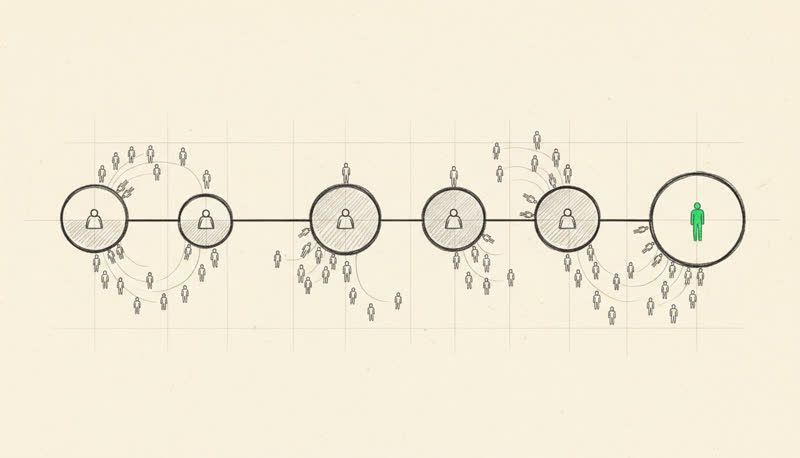
The pattern a Head of Ecommerce or TikTok Shop leadership search follows at Recruitmint, described generally rather than as one client's story.