An in-house recruiter is a direct employee: the company carries full cost of employment (salary, payroll taxes, benefits) plus the time it takes to hire that recruiter and the ramp period before they are productive. An embedded partner model supplies external recruiting capacity for multiple roles at once, billed as a monthly fee plus a reduced success fee, without adding headcount.
What an in-house recruiter actually costs
A recruiter's salary is the number everyone sees. It is not the number the company actually pays.
The Bureau of Labor Statistics, reported through O*NET, puts the 2025 median annual wage for Human Resources Specialists, the occupational category that includes recruiters, at $75,940 (onetonline.org, accessed 2025). That figure is base compensation only. It does not include payroll taxes, benefits, or any of the overhead that comes with carrying a full-time employee.
SHRM's research on recruitment costs notes that total hiring costs, once hard costs like advertising and sourcing tools are added to soft costs like staff time spent interviewing and onboarding, commonly run to several times a single position's salary once fully accounted for (shrm.org, accessed 2026). That math applies to hiring the recruiter too: before a new in-house recruiter places a single candidate, the company has already run its own hiring process to bring that person on, and typically absorbs a ramp-up period while the recruiter learns the business, the hiring managers, and what "good" looks like for each open role.
None of that is wasted spend. It is just spend that a headline salary figure does not show.
What an embedded partner model is instead
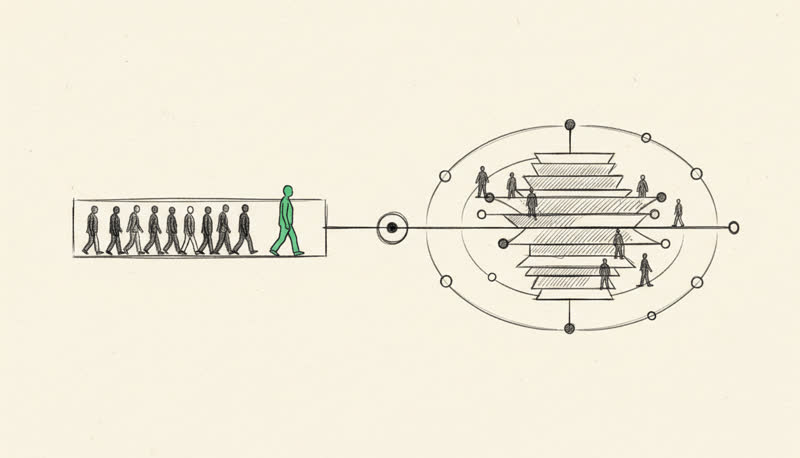
An embedded partner model does not add a line to payroll. It supplies dedicated recruitment capacity for multiple active roles, working as an extension of the client's existing team, structured as a monthly fee plus a reduced success fee rather than as an employee's full cost of employment.
In our own Embedded Partner structure, that capacity covers several open roles at once rather than one hire at a time, and the client does not run a separate hiring process, payroll setup, or benefits enrollment to stand it up. Pricing varies with role seniority, search complexity, and hiring volume, and is available on request rather than published as a fixed rate; the Hiring Scorecard will point toward this model when a company flags ongoing recruiting support or has four or more roles open at once, which is the scorecard's published recommendation threshold.
For a fuller structural comparison of what embedded capacity includes and what it tends to cost relative to the alternatives, see what an embedded recruiter is and the breakdown of embedded recruiter cost.
The flex-up, flex-down tradeoff
This is the structural difference that matters most once a company has more than one or two roles open at a time.
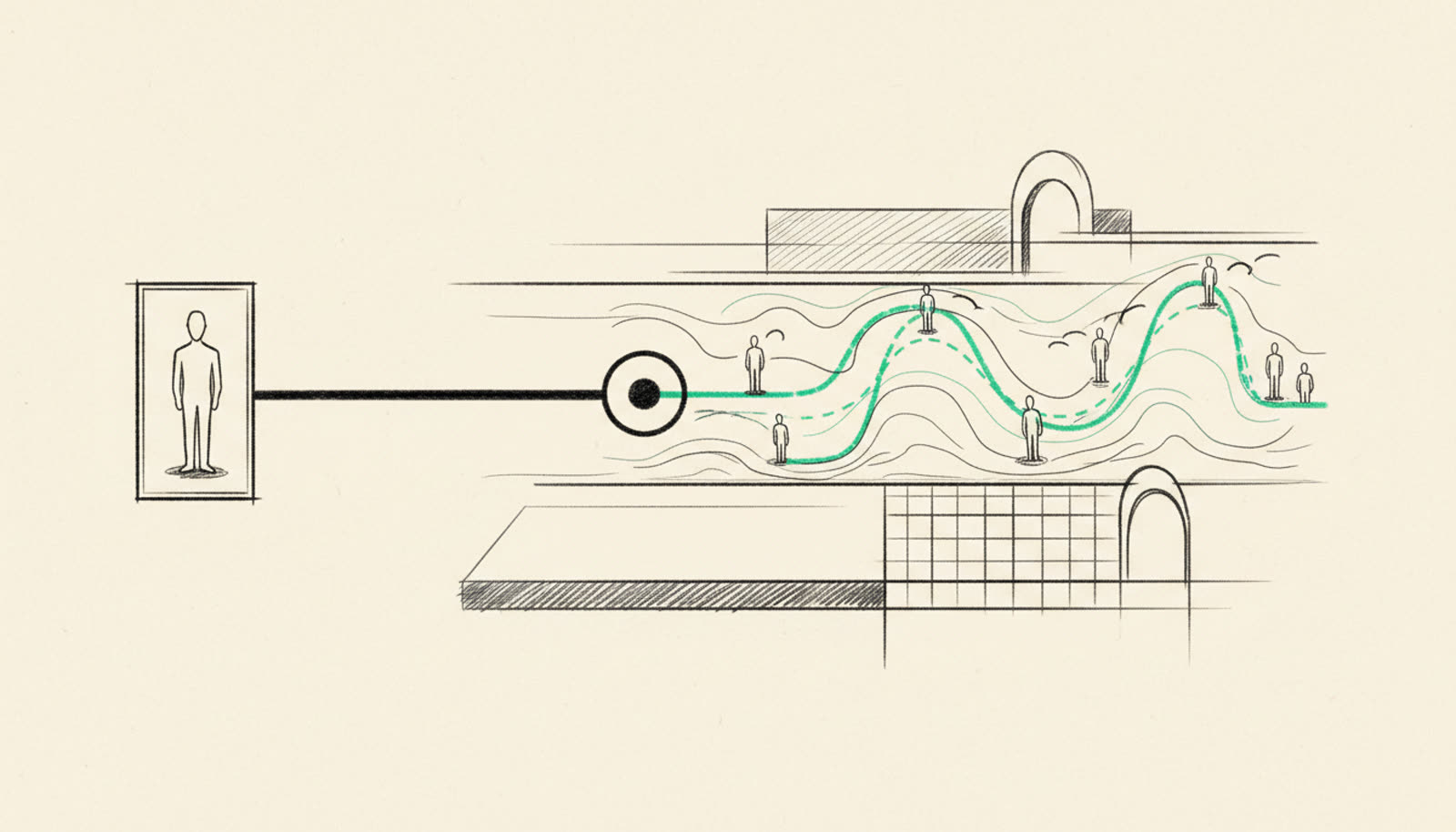
An in-house recruiter is a fixed, permanent cost. The company pays the same salary, taxes, and benefits whether there are two open roles or none. That fixed cost buys something real: institutional knowledge. A recruiter who has been inside the business for a year knows the hiring managers, the comp bands, the rejected-candidate history, and the reasons past searches stalled. That knowledge does not transfer with a resume.
Embedded capacity trades some of that permanence for flexibility. It can scale up when a company suddenly has several roles open, and scale down when hiring slows, without the company carrying a fixed headcount cost or repeating a hiring and onboarding cycle every time its recruiting needs change. The tradeoff is structural, not a judgment on which is better: one model is a person, the other is capacity sized to the work in front of it.
When each one fits
A company with one clear, well-defined mid-level role and steady applicant flow probably does not need either. Post the role, run interviews, and move.
The calculation changes once a company has recurring hiring needs across several roles, or a hiring manager spending a meaningful share of their own week on sourcing instead of running the business. At that point the question is not "recruiter or no recruiter," it is whether the company wants a permanent employee building long-term institutional knowledge, or capacity that flexes with the roles actually open right now. A side-by-side look at the broader tradeoffs, independent of any one firm's pricing, is in in-house recruiter vs search firm.
The short version
An in-house recruiter is a direct employee carrying the full cost of employment, a hiring cycle, and a ramp period, offset by the institutional knowledge a permanent hire builds over time. An embedded partner model is external capacity for multiple roles at once, billed as a monthly fee plus a reduced success fee, that scales with open-role volume instead of sitting on the payroll as a fixed cost. The right fit depends on whether a company needs one person who knows the business deeply, or capacity sized to however many roles are open right now.
 Recruit