 Recruit
How We Run a Cleared Talent Search After a Contract Award
How Award-to-Hire Intelligence turns a contract award into an earlier-starting cleared-talent search, described as Recruitmint's general process pattern, not a specific past engagement.
How Award-to-Hire Intelligence turns a contract award into an earlier-starting cleared-talent search, described as Recruitmint's general process pattern, not a specific past engagement.
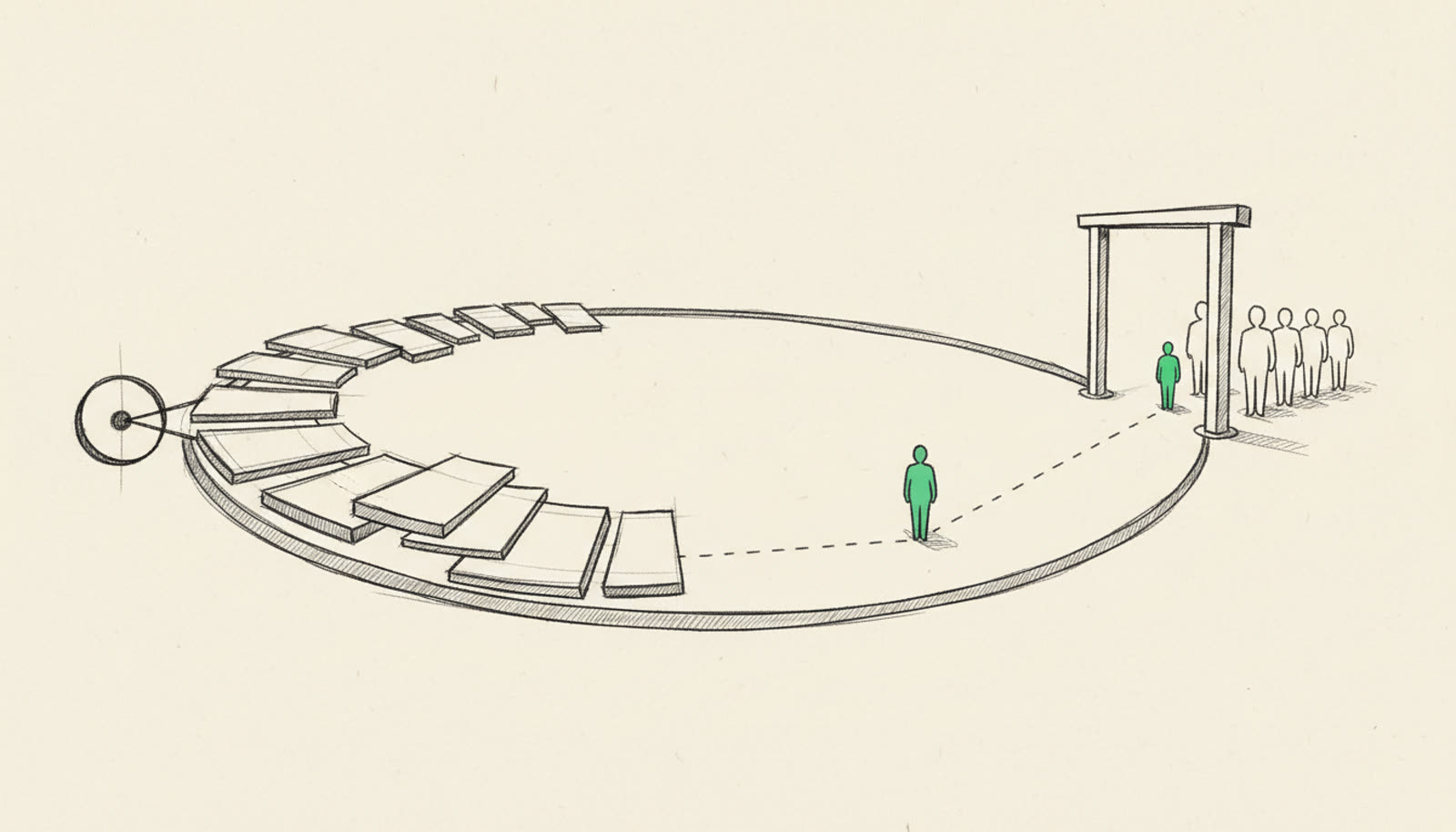
This describes a general pattern for award-driven hiring, not a specific past client search; no contractor, program, or candidate is named. Award-to-Hire Intelligence reads a contract award as an early workforce signal, then activates a cleared or technical search before the role formally opens, so hiring starts closer to when the program actually needs it.
A contract award is a public data event before it is a hiring event. SAM.gov's contract-data page states that it covers all contract actions federal agencies are required to report with an estimated value of $10,000 or more. That threshold is low enough to catch a meaningful share of task orders, modifications and new awards, which is the raw material Award-to-Hire Intelligence draws from in step one, as it appears on the government contracting section of the site.
Larger awards carry an additional layer of visibility. Under FAR Part 5, agencies must publicly announce contract awards over $5.5 million by 5:00pm Washington, DC time on the day of award, according to Acquisition.gov's publication of FAR Part 5. That same-day announcement requirement is one of the procurement mechanics that makes large awards visible almost immediately, well before a contractor's own hiring managers have finished standing up program requirements.
Neither of these is a hiring signal by itself. A $10,000 contract action or a same-day award announcement tells you an award happened. It does not tell you what roles it implies, where they sit, or when they open. That interpretation is the second step in the pattern, and it is where the actual judgment work starts. A broader look at how award timing shapes hiring decisions is in the government contractor recruiting guide.
As published, the pattern runs in three steps:
The published benefits that follow from running it this way are earlier visibility into potential hiring requirements, more relevant outreach tied to real programs rather than generic recruitment messaging, and faster mobilization as a program moves into its delivery phase.
Step two is where a signal becomes something a search team can act on. Assessing "the contractor, program scope, location and likely talent requirements," as the site describes it, means reading the award for what it actually implies: a program standing up in a new location, a delivery phase that needs cleared program support, a scope expansion that points to specific technical or professional roles.
That assessment feeds directly into calibration, the step we always run before sourcing starts on any search. For government contracting work this calibration has to answer a narrower set of questions than a commercial role does: what clearance level the position actually requires, whether the role is OCONUS or CONUS, what program-specific certifications or citizenship requirements apply, and how the reporting structure sits inside the contractor's existing team. Getting this wrong wastes the weeks a cleared search cannot afford to waste, since a candidate who is a strong fit on paper but the wrong clearance tier is not a fit at all.
Once calibration is set, sourcing runs against that specific mandate rather than a generic job description. For cleared and program roles this typically means:
This is also the stage where the fee model gets set, usually before sourcing begins, based on what the contractor actually needs. A single, well-defined cleared role with internal interview capacity fits a Sourcing Sprint, where we identify, engage and qualify candidates and hand over a calibrated shortlist. A harder-to-fill program role, or one where the contractor wants us managing the process end to end, fits a Full Search, run on a launch fee plus a success fee. A program ramping up multiple roles across a delivery phase is usually a better fit for an Embedded Partner, run on a monthly fee plus a reduced success fee, since that model is built for dedicated capacity across several active roles at once. Fees vary based on role seniority, search complexity and hiring volume, and pricing is available on request. The Hiring Scorecard walks through this in about two to three minutes and recommends a model based on role count, clearance and location constraints, and how much ongoing support is wanted.
For a Full Search, this is where the process looks most like any other search we run, with the clearance and program layer added on top:
The clearance timeline itself is the reason the earlier steps matter so much. The Trusted Workforce 2.0 quarterly progress report for FY2026 Q2 shows average clearance-investigation processing, using the government's "fastest 90 percent" reporting standard, at 44 days for Secret-level cases and 57 days for Top Secret-level cases, the fastest pace reported in over a decade. That is genuinely fast by historical standards. It is still 44 to 57 days that a search launched only after a role formally opens does not have, and it is exactly the gap Award-to-Hire Intelligence is built to close by starting the search when the workforce signal appears rather than when the requisition is written.
The table below organizes the same calibration questions described above into a format you can adapt internally when a workforce signal points to a cleared or program role. It is an illustrative pattern for structuring that conversation, not a published methodology on its own or a substitute for a contractor's own security and program review.
| Criterion | What "strong" looks like | Evidence to ask for |
|---|---|---|
| Clearance level required | Matches the contract's actual access requirement, not the highest tier assumed by default | Contract scope language, program security officer confirmation |
| Location and OCONUS status | Location, relocation timing and any hardship terms defined before sourcing starts | Program staffing plan, facility or base access requirements |
| Role scope vs. title | Role responsibilities map to what the delivery phase actually needs | Statement of work excerpt, program manager sign-off |
| Reporting structure | Position sits clearly inside the contractor's existing program team | Org chart or reporting line for the delivery phase |
| Interview and decision capacity | Interviewers and a decision process are ready before candidates are presented | Named interview panel, target decision timeline |
Award-to-Hire Intelligence works by reading a public signal earlier than a job posting would: a contract award, drawn from SAM.gov data on actions of $10,000 or more and made faster to spot on large awards by FAR Part 5's same-day announcement rule over $5.5 million. From there, the pattern runs contract awarded, workforce signal identified, search activated, then into the same calibration, sourcing, assessment and close steps any search follows, adjusted for clearance and program requirements. With Secret and Top Secret clearance processing averaging 44 and 57 days respectively even at the fastest pace reported in over a decade, starting that process at the signal stage, not the requisition stage, is the entire point.
It means we monitor newly awarded government contracts and relevant program activity broadly, and assess what a given award's scope, location and program stage likely imply for workforce needs. It is a general monitoring and calibration pattern, not a promise to track any named contractor without engagement.
SAM.gov's contract-data page states it covers all contract actions federal agencies are required to report with an estimated value of $10,000 or more, which is the underlying public data the first step draws from. Larger awards, those over $5.5 million, additionally require a same-day public announcement under FAR Part 5, making them visible even faster.
Because 44 days for a Secret-level case and 57 days for a Top Secret-level case, as reported in the FY2026 Q2 Trusted Workforce 2.0 progress report, is still real time that a program's delivery schedule may not have if the search only starts once the role is formally open. Starting a search earlier, at the workforce-signal stage, is what recovers that time.
It depends on role count and how much of the process the contractor wants to run internally. A single defined role with internal interview capacity fits a Sourcing Sprint; a harder-to-fill or higher-stakes role fits a Full Search, run on a launch fee plus a success fee; multiple roles across a program ramp typically fit an Embedded Partner, dedicated ongoing capacity on a monthly fee plus a reduced success fee. The Hiring Scorecard recommends a model based on role count, clearance and location constraints, and support needed.
No. This describes our general Award-to-Hire Intelligence pattern as published on the site, not a narration of any specific client, program or placement. Further detail on how award-driven hiring works more broadly is in the government contractor recruiting guide.

How recruiting for government contractors differs from commercial hiring, what Award-to-Hire Intelligence means, and where the clearance and procurement facts below come from. Every procurement or clearance figure is cited to a federal source.
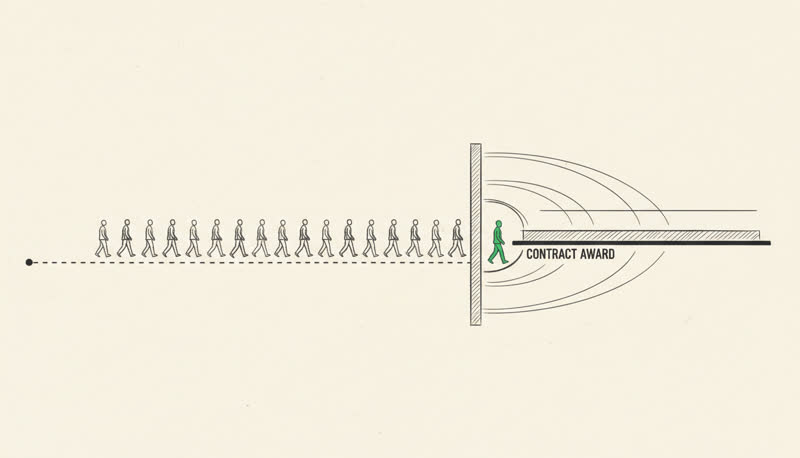
A government contract Program Manager hire is often bottlenecked by clearance timelines, not available talent. This guide covers what the role owns, what to evaluate, and how to time the search against contract award.
The pattern a linguist or SDVOSB-contractor search follows at Recruitmint, including the SBA's own SDVOSB eligibility rules, described generally rather than as one client's story.