 Recruit
AI Trainer Pay in 2026: Hourly Rates by Type of Work
From $3 an hour of accepted chore footage to $100 an hour for a physician rating medical answers. Every number here is a published platform rate or a documented contributor report.
From $3 an hour of accepted chore footage to $100 an hour for a physician rating medical answers. Every number here is a published platform rate or a documented contributor report.
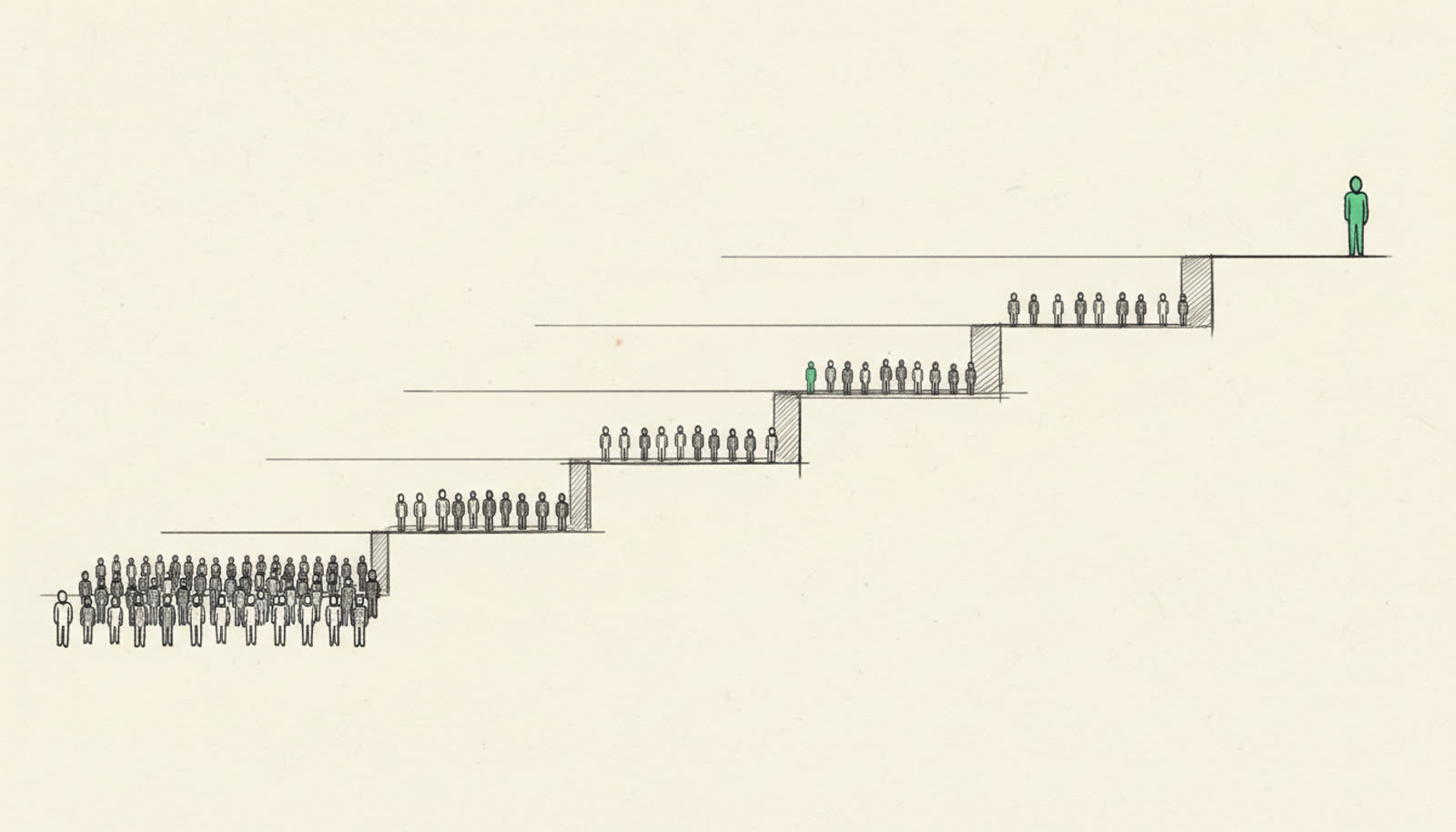
AI trainer pay in 2026 spans from roughly $3 an hour of accepted footage on entry-level chore-recording platforms to $100 or more an hour for a specialist rating model outputs in their own field. The gap is not random: it comes down to what is being recorded, whether pay is measured per clip or per approved hour, and how much skill the task requires.
Key numbers
"AI trainer" is not one job. It covers at least three distinct kinds of paid work, and each one sits in a different part of the pay scale.
The first is egocentric video recording: filming yourself doing a real task, from your own point of view, so a lab can teach a model or a robot what the task looks like from the inside. Cooking, laundry, driving, trades work, warehouse packing, caregiving. This is the category our AI Trainers program, Atlas Capture, Claru and Perle all operate in.
The second is data labeling and evaluation: reviewing an AI system's output and scoring it, correcting it, or comparing two answers. This is closer to knowledge work and is where Mindrift and OpenTrain concentrate their higher-paying listings, particularly for domain specialists such as physicians, lawyers or engineers rating technical answers.
The third is a hybrid: OpenTrain's job feed also lists an egocentric video data collection role alongside its evaluation listings, so the same platform can show both a $30-50/hr multilingual evaluation listing and a physical-task video role at a different rate.
If you have seen a headline like "$100 an hour to train AI" next to another that reads "$3.80 a clip," both are true. They are describing different jobs on the same general market. For a broader walk through what the job category looks like day to day, see what an AI trainer job actually is.
Two payment structures dominate this market, and the difference between them explains most of the confusion around "how much AI training actually pays."
Per clip. You are paid a fixed amount for a defined piece of footage, regardless of how long it took you to shoot it. Atlas Capture's homepage rate card lists tasks like "Fold laundry, standing" at $4.20 for a 4 to 6 minute clip, and "Load the dishwasher" at $3.80 for a 3 to 5 minute clip. That looks like reasonable per-minute pay until you account for setup, retakes and review.
Per approved hour. You are paid for footage the platform accepts, measured in hours of usable recording rather than number of clips. Our AI Trainers program works this way: a trainer sees the task, the length and the hourly rate in the brief before accepting, and payment is calculated once the footage clears review. What "approved" means is specific: the task has to be real, the camera steady and well lit, the whole task visible, with no idle time padding the runtime. We cover the mechanics of this review step in more detail in what counts as an approved hour of AI training footage.
The sticker rate and the effective rate are not the same number until you know which of these two you are looking at.
The clearest documented example of the gap between sticker rate and effective rate comes from Atlas Capture. RemoWork's July 2026 review of the platform reports contributors typically spending 30 to 45 minutes to produce a clip under two minutes long, once setup, doing the task properly, checking the footage, and reshooting an unusable take are all counted. That is the production time behind the platform's per-minute base rate, which RemoWork put near 10 cents a minute (27 cents a minute at Tier 3).
That gap between recording time and finished clip length is the reason RemoWork's separate 2026 platform roundup lands on a lower effective figure once production time is folded in: roughly $3 to $9 an hour for first-person video work across Atlas Capture and several comparable platforms, well below what a per-minute or per-clip number implies if you only count the footage itself.
This is not a criticism unique to one platform. Any per-clip or per-task rate will understate your real hourly return unless setup and retake time is short relative to the clip length. A per-approved-hour rate does not eliminate unpaid effort either (footage that fails review still costs you the time it took to shoot), but it ties the number in the brief directly to the hours the platform actually accepts, rather than to a clip count.
| Platform | Work type and published rate | How pay is measured | Payout method and cadence |
|---|---|---|---|
| Recruitmint AI Trainers | Everyday tasks from your own point of view (cooking, cleaning, driving, trades, caregiving and more), $6 to $15+ per hour depending on the task | Per approved hour of footage | Bank transfer, Wise, Payoneer or PayPal, on the schedule stated in the brief, once footage is approved |
| Atlas Capture | Household chores in short clips, e.g. "Fold laundry, standing" $4.20 for 4-6 minutes | Per clip; RemoWork's July 2026 review found a base rate near 10 cents a minute of footage, with a Tier 3 rate of 27 cents a minute | Wise or crypto, biweekly on the 7th and 21st, $20 minimum, after an unpaid onboarding trial |
| Claru | Egocentric video across cooking, driving, manufacturing, cinematic and game-environment tasks | Per accepted hour of footage; RemoWork's 2026 roundup lists Claru at roughly $6 an hour of accepted footage | Not stated in the cited sources |
| Perle | Egocentric video capture, including a head-strap rig on some projects | Per approved hour; RemoWork's 2026 roundup lists Perle at roughly $9 an hour of approved footage | Not stated in the cited sources |
| OpenTrain | Expert evaluation and multilingual training tasks, e.g. a "Multilingual AI Trainer" listing at $30-50/hr | Per hour, task-based | Not stated in the cited sources |
| Mindrift | Domain-expert AI training, $15 to $100+ per hour depending on project complexity; entry level $15-30/hr | Per hour, project-based | No employment contract, no fixed hours (per Mindrift); payout cadence not stated in the cited sources |
For a wider side-by-side of platforms in this category, see the best platforms that pay you to train AI, compared by pay, tasks and payout. If Atlas Capture specifically is the one you are weighing, we go deeper on it in the Atlas Capture review, and the same treatment exists for Mindrift's pay and who gets in.
Four things consistently correlate with a higher published rate across the platforms in this category.
Skilled trades and specialist work. Our task list includes trades such as electrical, plumbing and carpentry alongside general chores, and we say plainly that simple household tasks sit at the low end while skilled, specialist or equipment-heavy tasks pay more, with some projects going above $15. A trade task requires competence a general household chore does not, and the rate reflects it.
Specialist equipment. Perle's "Project Pretzel" work includes a head-strap camera budget rather than a phone mount, and RemoWork's 2026 roundup lists it at roughly $9 an hour, near the top of the roughly $3 to $9 per approved hour range it found across first-person video platforms generally, including Atlas Capture. OpenTrain's job feed also lists an egocentric video data collection role distinct from its general labeling work, another signal that equipment and setup complexity move the rate.
Multi-hour or ongoing projects. Platforms that pay per approved hour reward continuous, well-executed footage rather than short, repeatable clips, which is one reason egocentric-hour rates tend to sit above per-clip rates for comparable footage.
Quality and vetting history. Mindrift reports that 70 percent of its AI Trainers hold a Masters or PhD, positioning its higher rates around a credentialed pool rather than open sign-up, and OpenTrain's expert evaluation listings follow the same pattern. Conversely, RemoWork's July 2026 review flags audit-based account suspensions near payout as Atlas Capture's biggest documented risk, a reminder that quality history affects whether you get paid at all, not just how much.
Our AI Trainers program sits in the everyday-task, per-approved-hour band: $6 to $15+ an hour to record cooking, cleaning, laundry, driving, childcare, pet care, retail, warehouse, trades, office work, food service, commercial cleaning or caregiving tasks, filmed from your own point of view on a recent phone (iPhone 12, Pixel 6, Galaxy S21 or newer) or on a camera we ship and take back afterward.
The rate is shown in the brief before you accept a project, and payment is calculated per approved hour once footage clears review, by bank transfer, Wise, Payoneer or PayPal. Trainers are independent contractors who choose which projects to accept. We contract with large AI and robotics labs, and most projects are under NDA, which is why no specific lab is named on the sign-up page. Faces are optional on most projects, footage is licensed for training rather than posted publicly, and a trainer can withdraw and have their profile deleted by email at any time.
This is one option in a category that also includes clip-based platforms like Atlas Capture and hourly-evaluation platforms like Mindrift and OpenTrain. None of these is universally better; they measure and pay for different kinds of work. If you are weighing our approach specifically against a collector-network alternative, see Claru against our AI Trainers program.
It makes sense if you already do the task in question as part of ordinary life (cooking dinner, doing laundry, working a trade, driving) and can film it without disrupting anyone who might appear in frame. It fits a schedule of a few hours a week rather than a full-time income; most trainers in our program report doing 5 to 20 hours a week, some more.
It does not make sense as a way to fill a large block of guaranteed hours. No platform in this category, ours included, publishes a guaranteed volume of work; projects are matched based on what a lab currently needs and what you can offer. It also is not a fit if you cannot legally film in the space you have in mind, or if anyone likely to appear in the footage is not comfortable being recorded.
| Criterion | What to check | Evidence to ask for |
|---|---|---|
| Is the rate per clip or per approved hour | Read the brief for the unit of pay, not just the headline number | The exact wording in the task brief, not the platform's homepage rate |
| What "approved" means | Ask what footage gets rejected and why | A written definition (steady, well lit, whole task visible, no padding) |
| Payout method and minimum | Confirm how and when you get paid | Payout schedule (weekly, biweekly) and any minimum balance to withdraw |
| Equipment required | Confirm phone model or whether a camera is shipped to you | Device requirements stated in the brief before you start |
| What happens to the footage | Confirm licensing and whether faces are required | A statement that footage is used for training, not posted publicly |
| How to stop | Confirm you can withdraw and have your data deleted | A clear opt-out process, not a buried support ticket |
If you are earlier in the process and still deciding whether this category of work is worth setting up for, how to become an AI trainer with no experience walks through the setup step by step, and is AI training work legit covers how to tell a real platform from a scam before you hand over any footage.
AI trainer pay is not one number: it runs roughly $3 to $9 an hour once production time is counted for per-clip household-chore work, $6 to $15+ an hour for everyday tasks paid per approved hour, and $15 to $100+ an hour for domain-expert evaluation work. The rate you get depends on the task, the equipment it requires, and whether you are paid for footage produced or footage approved. Read the unit of pay in the brief before you accept anything, and treat any platform that will not tell you that unit as a reason to look elsewhere.
Yes. The IRS defines an independent contractor as someone the payer controls only on the result of the work, not the method, and platforms in this category, our AI Trainers program included, engage trainers as independent contractors rather than employees. That means no tax is withheld at the source; you are responsible for reporting the income and any applicable self-employment tax in your own jurisdiction.
Yes, and most trainers do. Our own guidance is that most AI Trainers work 5 to 20 hours a week, with some doing more, and projects are accepted or declined individually rather than scheduled as shifts. For a closer look at how hours and scheduling actually work across this category, see part-time AI training jobs: how many hours, what schedule, what pay.
Yes, in two ways. Some platforms quote different currencies or bands by market (RemoWork's 2026 platform roundup lists DataVale at INR 270 to 370 per approved hour, for example), and some projects on any platform require a specific country or language because the lab needs footage or language coverage from that market. Our AI Trainers program pays worldwide but notes that certain projects need a specific country or language.
Because they are not measuring the same thing. A per-clip rate on a chore-recording platform and a per-approved-hour rate on an everyday-task platform can describe similar footage but pay very differently once production and review time are counted, and a domain-expert evaluation rate is compensating for professional judgment rather than filming time at all.
Sometimes. Platforms that pay more for egocentric video, such as Perle's head-strap rig work, often require or supply equipment beyond a basic phone mount. We ship a camera and mount, free, for some projects and take it back afterward; a recent phone with a simple mount is enough for most tasks.
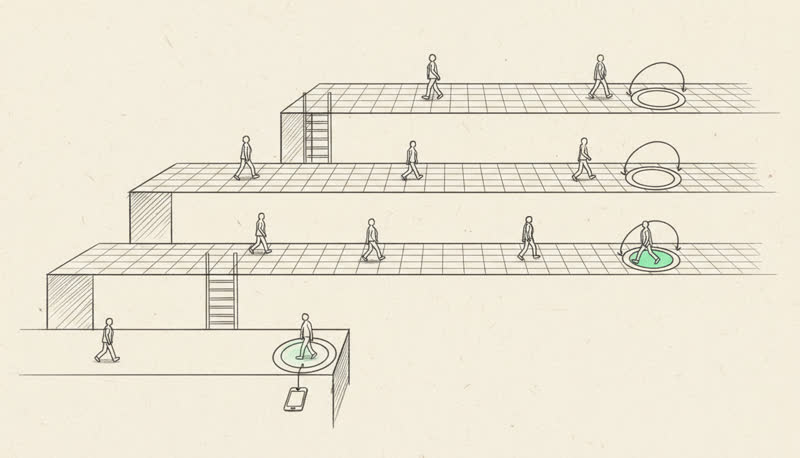
The three kinds of AI training work that actually exist, the pay bands each one carries, the platforms that hire, and the one kind you can do with no degree and a phone.
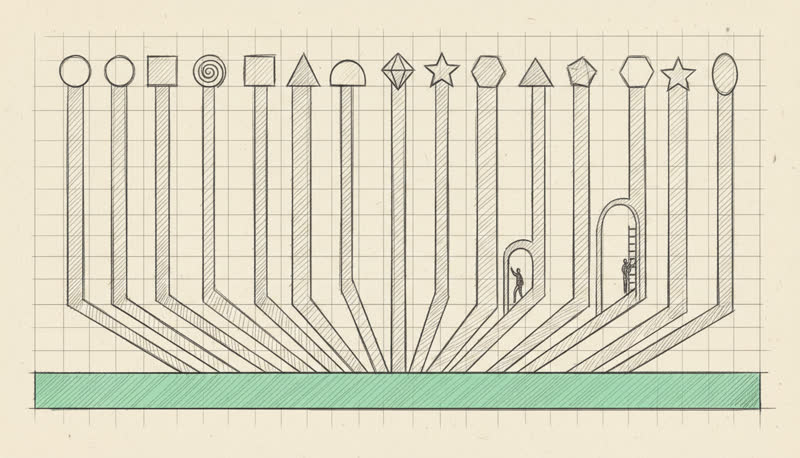
Twelve platforms, one table: what each one asks you to do, what it publishes about pay, how and when it pays, and who it is genuinely right for.
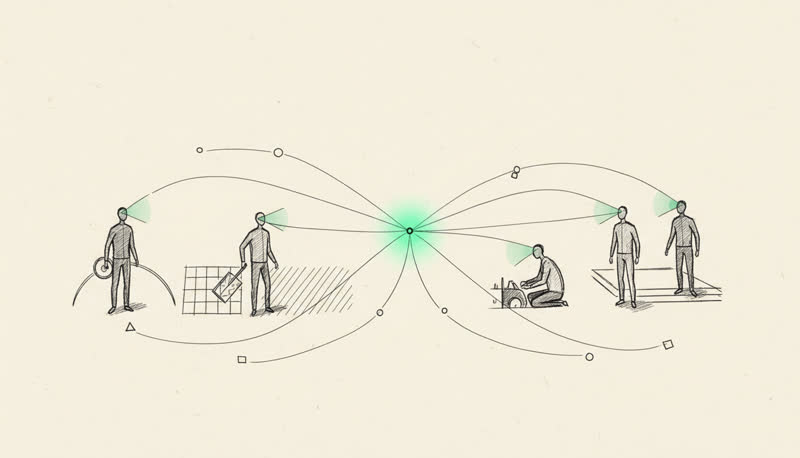
Robotics labs are buying millions of hours of first-person video of people cooking, cleaning, driving and working. This is how the work is briefed, filmed, approved and paid.